A real bank will never ask you to move your money to a "safe account" or read out a code down the phone. The hard part is staying calm long enough to remember that — so here is what to do, without the panic.
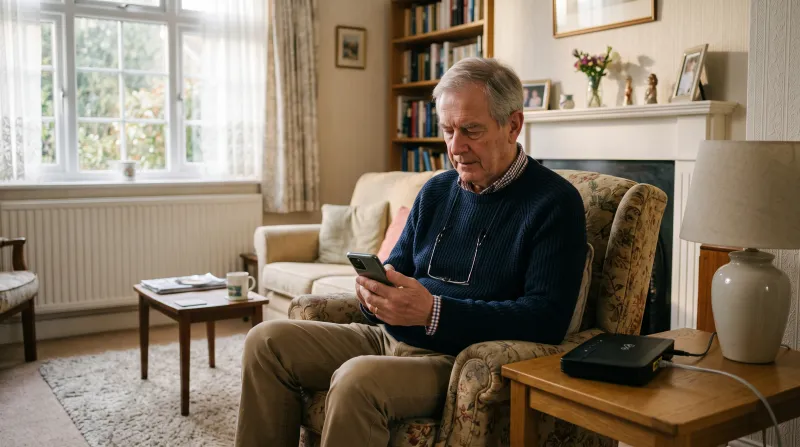
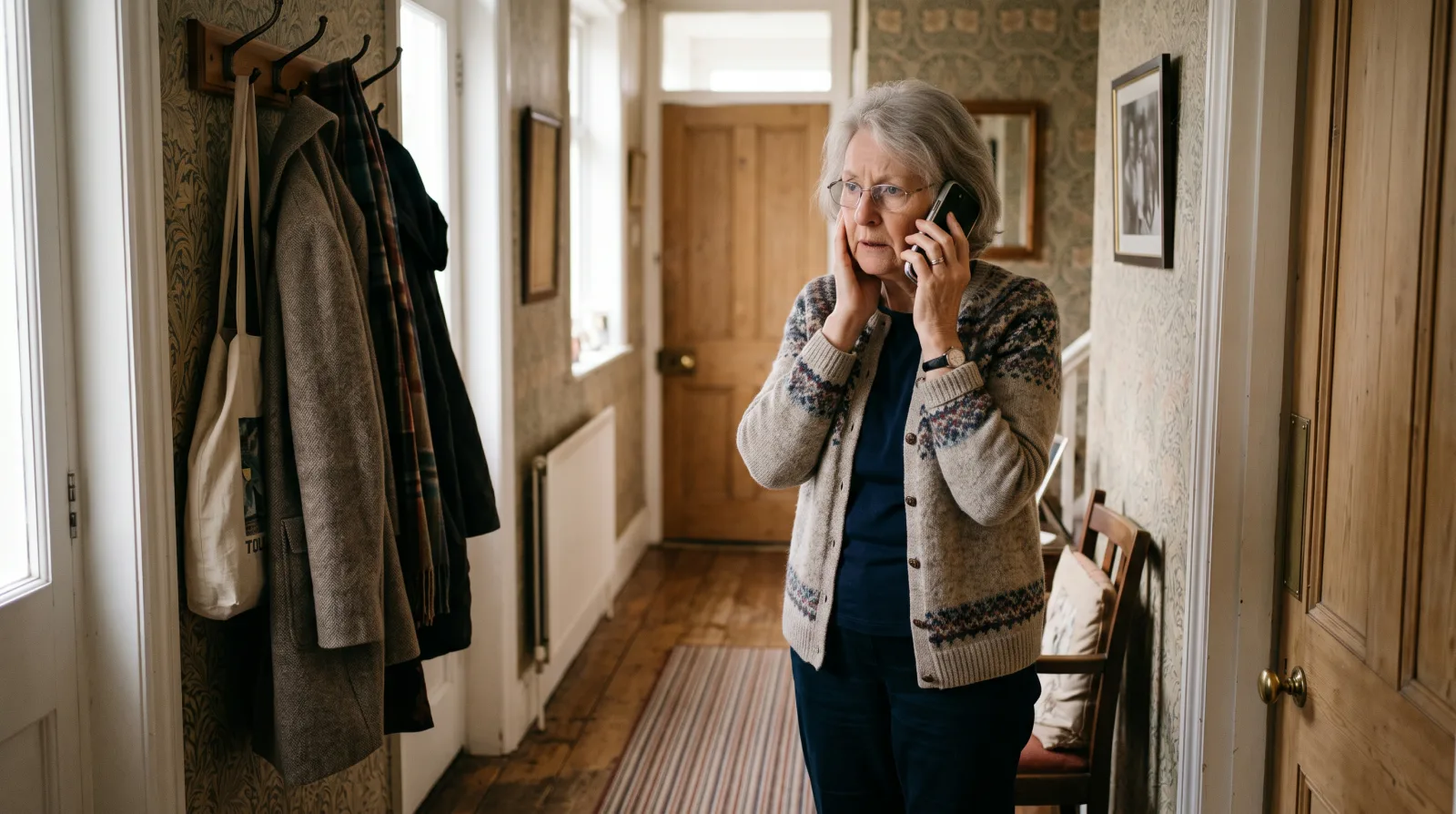
The phone rings, the screen shows your bank's name, and a polite, serious voice tells you there's a problem with your account. Someone has tried to take money. They need you to act now to keep it safe. It sounds exactly like the sort of call a bank would make — and that is the whole point. These calls are written to sound right, and to move fast, because fast is how they work.
You don't need to be an expert in fraud to stay out of this. You need one or two plain rules, and the confidence to use them even when the person on the line sounds entirely genuine. Here they are.

Spoofing is when a caller or texter fakes the number that shows on your screen, so it displays a name or number you trust — your bank, a delivery firm, even a government line. The display is not proof of who is calling. Treat the number you see as a guess, not a guarantee.
Why the screen can lie
Most of us assume that if the caller ID says "Barclays" or shows the number printed on the back of our card, the call must really be from the bank. It need not be. The technology that routes calls and texts lets the sender choose what appears on your handset, and criminals use that to borrow a trusted name. A scam text can even drop into the same thread as genuine messages from a real company, because it is labelled with the same sender name. So the single most useful habit is this: let the display tell you who it might be, never who it is.
The "safe account" trick
The most common version goes by a dull official name — authorised push payment, or APP, fraud. Stripped of the jargon, it means you are talked into sending your own money to an account the criminal controls, believing you are protecting it. The caller says your account has been compromised and that, to keep your balance safe while they investigate, you must move it to a new "safe account" they'll set up for you. There is no such thing. A bank never asks you to transfer your money elsewhere to protect it. The moment money is described as needing to be "moved to keep it safe", the call is a scam.
The pressure is the tell. A real bank is happy for you to hang up, think it over, and call back on your own time. A criminal is not — they need you on the line and acting now, because a pause is when people realise something is wrong. Feeling rushed is itself a warning sign.
The signs, in one place
Scam calls and texts vary, but they lean on the same handful of moves. If you can recognise these, you can recognise almost any version of them.
 Warning signs worth pausing on
What a bank will never do
It helps to know the short list of things a genuine bank, or the police, will simply never ask of you over the phone. They will never ask you to move money to another account. They will never ask for your full PIN or password, or for a passcode they've just texted you. They will never ask you to withdraw cash and hand it to a courier, or to buy gift cards. And they will never object to you hanging up and calling them back on a number you've chosen yourself. If a caller asks for any of these, that alone settles it — end the call.
The display tells you who the call might be from. It never tells you who it is.
The one rule: hang up and call back
If a call unsettles you, the safest thing you can do costs nothing: hang up, wait a moment, and call the organisation back on a number you trust — the one on the back of your card, on a statement, or on the official website. Use a different phone if you can, or wait a minute or two before dialling, so you're not reconnected to the same caller on a line they've kept open.
There is also a shortcut built for exactly this. In the UK you can dial 159 to be connected securely to your own bank. It's a service called Stop Scams UK, supported by many of the major banks, and it exists so you have a trusted number to ring whenever a call about money doesn't feel right. It isn't a reporting line or a directory — it simply puts you through to your bank, safely.
Texts, links and "smishing"
The same thinking covers scam texts, sometimes called smishing. A message claims a parcel needs a small fee, a payment has failed, or your account needs verifying, and it carries a link. The link leads to a convincing copy of a real website built to harvest your details. The rule mirrors the phone one: don't tap the link. If you think the message might be genuine, go to the company the long way round — type its address yourself or use its app — rather than through anything the text gives you. You can report a suspicious text free by forwarding it to 7726, which spells "SPAM" on a keypad.
If something feels wrong, or already happened
Trusting the uneasy feeling is reasonable, not rude. Ending a call to check is a perfectly normal thing to do, and no honest caller will mind. If you think you've been targeted, you can report it to Action Fraud, the national reporting centre for fraud in England, Wales and Northern Ireland (Police Scotland take reports in Scotland). If you've actually moved money or shared details, contact your bank straight away — the sooner they know, the more they can do — and then report it. Acting quickly matters more than feeling embarrassed; these scams are built to catch sensible people on an ordinary day.
In short
No bank asks you to move money to stay safe, or to read out a code, and no genuine caller minds you hanging up to check. Let the screen suggest who's calling, never confirm it; when in doubt, hang up and call back on a trusted number, or dial 159. UK Finance runs a simple public campaign on all of this called Take Five to Stop Fraud, which is worth a look. For more on handling the services that generate these calls and texts, see whether switching broadband or mobile is worth it, and for how your money is protected if a bank itself fails, what the FSCS covers and up to how much.
Sources
- Action Fraud — the UK national fraud and cyber crime reporting centre
- UK Finance — Take Five to Stop Fraud — the Stop, Challenge, Protect advice on bank and payment scams
- Ofcom — Scam calls and messages — number spoofing, nuisance calls and reporting scam texts to 7726
This is general information and sponsored content from FREMUR CONSEIL SAS. It is not financial, tax or legal advice, and not a recommendation to buy any product or service. Figures are averages or illustrative examples, correct as at the date shown, and your own situation may differ; for your own money, pensions or tax, use the official bodies and sources cited above, such as GOV.UK.