 Home & bills
Council tax bands still rest on what a home was worth back in 1991. That quirk is why a neighbour in a near-identical house can pay less — and why it is worth checking the facts before you ask for yours to be looked at.
Council tax lands on the mat every spring and most of us simply pay it. But the band your home sits in — the letter that, more than anything else, sets the size of the bill — is decided by a rule that surprises people when they first hear it. In England, your band is based on what the property was estimated to be worth on 1 April 1991. Not today's value, not the price you paid: its value more than thirty years ago.
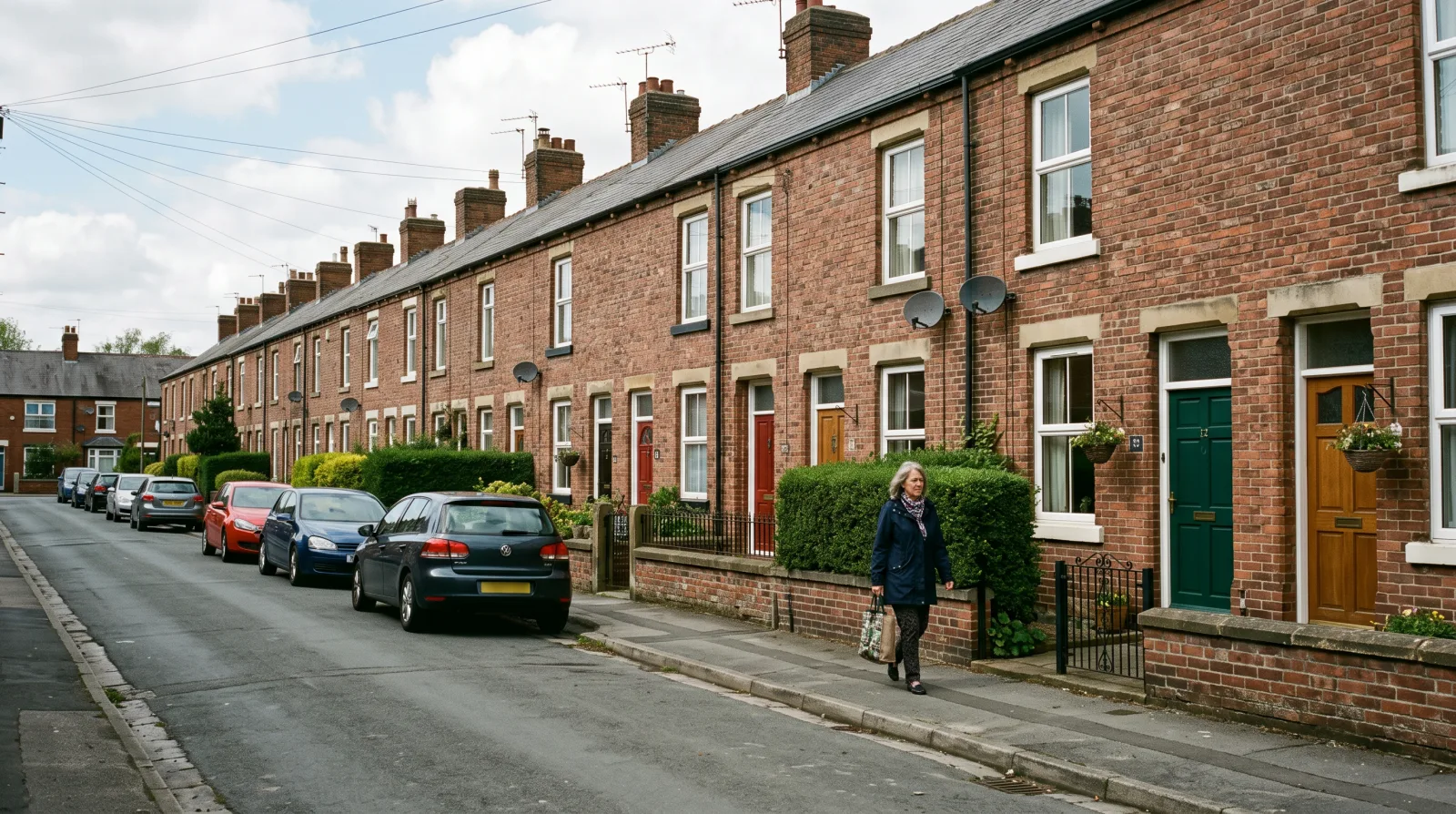
That single fact explains a lot, including why two similar homes on the same street can end up in different bands. Here is how the bands are set, how to check yours against the neighbours, and what actually happens if you ask for it to be reviewed.

A council tax band is a letter from A to H (in England) that groups homes by their estimated open-market value on 1 April 1991. Your local council uses the band to work out your bill, with Band D as the usual benchmark. The band reflects the property, not who lives in it or what they earn.
Why the magic date is 1991
When council tax replaced the poll tax in 1993, every home in England and Scotland was placed in a band using its estimated value as at 1 April 1991. Those bands have never been revalued in England since. So a home built or extended in 2010 is still given a notional 1991 value for banding, and a house that has shot up in price in a sought-after area keeps the band it was first given unless something specific triggers a change.
The nations differ. England and Scotland both use 1991 values — in Scotland the bands are set by the local assessor through the Scottish Assessors Association rather than by the body that covers England. Wales was rebased to 1 April 2003 values and has nine bands (A to I) rather than eight, so Welsh bands reflect a more recent snapshot. Northern Ireland does not use bands at all; it runs a separate rates system.
Who sets the band
In England and Wales the bands are set and maintained by the Valuation Office Agency (VOA), which is part of HMRC. The council collects the tax and sets the amount charged for each band locally, but it does not decide which band you are in — that is the VOA's job. It is a useful distinction: if you think the band is wrong you deal with the VOA, whereas a question about a discount or the bill itself goes to the council.
The England bands at a glance
Each band covers a range of 1991 values. The figures below are the official England ranges; they are not today's prices.
| Band | Value on 1 April 1991 |
|---|---|
| A | Up to £40,000 |
| B | £40,001 to £52,000 |
| C | £52,001 to £68,000 |
| D | £68,001 to £88,000 |
| E | £88,001 to £120,000 |
| F | £120,001 to £160,000 |
| G | £160,001 to £320,000 |
| H | More than £320,000 |
Band D is the one councils quote as the standard rate, and the other bands are charged as fixed proportions of it — Band A pays less, Band H roughly twice the Band D figure. The exact amount in pounds depends entirely on where you live, because each council sets its own level.
How to check your band and compare it
You can look up any home's band free of charge. The official Check your Council Tax band service on GOV.UK, run by the VOA, lets you search by postcode and see the band for your property and every other address nearby. Because the register is public, you can line your home up against neighbouring houses that look much like yours.
 Before you query your band
Grounds for a review or a challenge
Finding a lower-banded neighbour is a reason to look closer, not proof of an error. The VOA will only change a band where there is a recognised reason. You can make a formal challenge (a "proposal") in limited circumstances — for instance within the first six months of becoming the person responsible for the bill, or where the property has physically changed, been partly demolished, or the surrounding area has altered in a way that affects value. Outside those situations you can still ask the VOA to review the band, but it will look at the evidence and decide, and it is under no obligation to lower it.
A review is not a one-way bet. When the VOA looks at your band it can decide the band is too low and move it up — and the same evidence can prompt a look at similar homes, so a neighbour's band could rise too. There is no promise of a refund or a reduction; the outcome might be no change, a lower band, or a higher one. Check the facts carefully before you ask.
Discounts are a separate matter
It is easy to muddle two different things. The band reflects the property; discounts reflect who lives there, and they are handled by the council, not the VOA. The best known is the single person discount of 25% for an adult living alone. Others include a disregard for full-time students, a reduction linked to severe mental impairment, and discounts on some empty or second homes. None of these changes your band — they reduce the bill the band produces. If you think you qualify for one, that is a conversation with your council and well worth having regardless of the band question.
The band reflects the property's 1991 value; the discount reflects who lives there. They are decided by different people.
In short
Council tax bands in England are a snapshot of 1991 values that has never been redrawn, which is why an apparently identical neighbour can sit a band lower. Checking is free and sensible: use the official GOV.UK service, compare like with genuinely like, and remember that a formal review can move a band up as easily as down, for you or for the street. Keep the band question and any discount you are owed firmly separate. For other household bills worth a second look, see what the energy price cap does and does not do and how to read an energy bill in a few minutes.
Sources
- GOV.UK — Council Tax bands — how homes are banded, the England value ranges and how to check your band
- Valuation Office Agency — the body that sets and reviews council tax bands in England and Wales
- GOV.UK — Council Tax — bills, who is responsible and discounts such as the single person reduction
This is general information and sponsored content from FREMUR CONSEIL SAS. It is not financial, tax or legal advice, and not a recommendation to buy any product or service. Figures are averages or illustrative examples, correct as at the date shown, and your own situation may differ; for your own money, pensions or tax, use the official bodies and sources cited above, such as GOV.UK.